How to Improve Indoor Air Quality Naturally: Simple Ways to Create a Healthier Home
Indoor air quality plays an important role in maintaining a healthy and comfortable living environment. Many people focus on outdoor pollution but overlook the harmful particles, allergens, and chemicals that can accumulate inside their homes. Dust, pet dander, mold, cooking fumes, and household cleaning products can contribute to poor indoor air quality.
Learning how to improve indoor air quality naturally can help create a fresher and more comfortable home without relying heavily on expensive equipment or chemical products. Simple changes in cleaning habits, ventilation, humidity control, and household maintenance can make a significant difference.
In this guide, we will explore practical and affordable ways to improve indoor air quality, reduce indoor pollutants, and maintain a healthier living space.
Why Is Indoor Air Quality Important?
Indoor air quality refers to the condition of the air inside buildings, including homes, offices, and schools. Poor air quality can affect comfort, respiratory health, and overall well-being.
Common indoor pollutants include dust mites, pollen, mold spores, smoke, volatile organic compounds (VOCs), and particles released during cooking.
Exposure to these pollutants may contribute to several problems, including allergies, respiratory irritation, headaches, fatigue, eye irritation, and worsening asthma symptoms.
Improving indoor air quality helps reduce exposure to these pollutants and supports a healthier home environment.
1. Improve Natural Ventilation
One of the simplest ways to improve indoor air quality naturally is to increase ventilation. Fresh outdoor air can help dilute indoor pollutants and remove stale air.
Opening windows and doors when outdoor conditions are suitable allows fresh air to circulate throughout the house. Cross-ventilation, which involves opening windows on opposite sides of a room, can improve airflow.
However, outdoor air is not always cleaner. Keep windows closed during periods of heavy traffic pollution, wildfire smoke, or high pollen levels.
Using kitchen and bathroom exhaust fans also helps remove moisture, odors, and airborne contaminants.
2. Keep Your Home Clean and Dust-Free
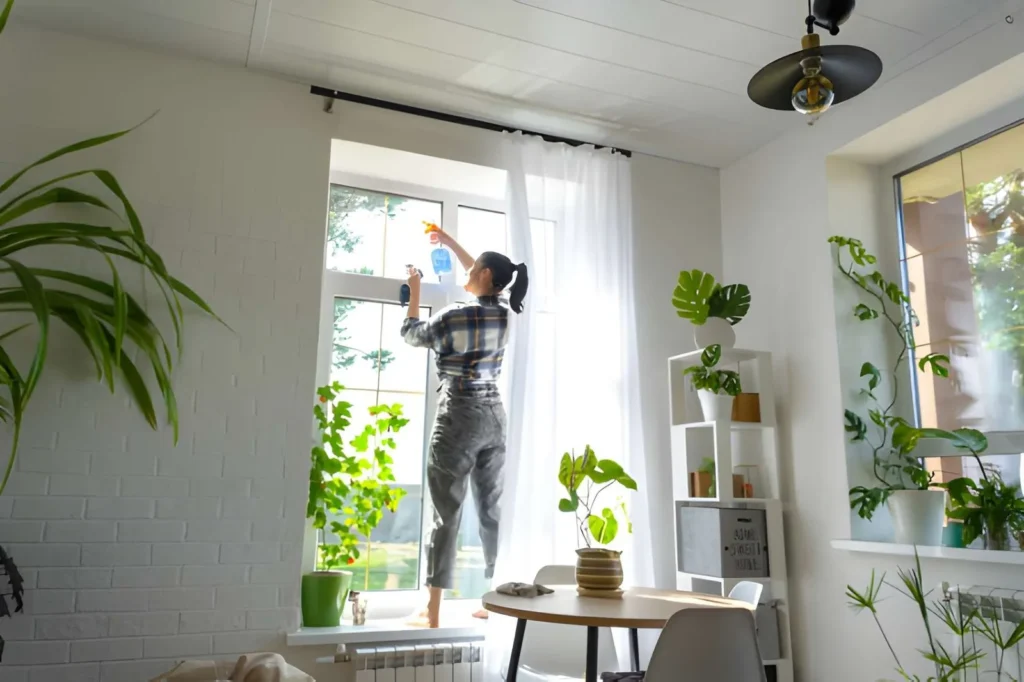
Regular cleaning is essential for reducing indoor air pollution. Dust particles can contain allergens, pet dander, pollen, and other irritants.
Vacuum carpets, rugs, and upholstered furniture frequently. A vacuum cleaner equipped with a HEPA filter can help capture fine particles instead of releasing them back into the air.
Use a damp microfiber cloth to clean furniture, shelves, and other surfaces. Damp dusting prevents particles from becoming airborne.
Wash bedding, pillowcases, and curtains regularly to reduce dust mites and accumulated allergens.
Maintaining a consistent cleaning routine is one of the most effective ways to create a cleaner indoor environment.
3. Control Indoor Humidity Levels
Excessive moisture creates favorable conditions for mold and dust mites. Maintaining balanced humidity is therefore an important part of improving indoor air quality.
Aim to keep indoor relative humidity between 30% and 50% whenever practical.
You can control moisture naturally by improving ventilation, repairing leaking pipes, and drying wet surfaces promptly.
Avoid leaving damp towels, clothing, or carpets indoors for extended periods. When cooking or showering, use exhaust fans to remove excess moisture.
A simple humidity monitor can help identify areas where moisture levels are consistently too high.
4. Choose Natural and Low-Toxicity Cleaning Products
Many conventional cleaning products contain fragrances and chemicals that can release VOCs into indoor air.
Choosing fragrance-free, low-VOC cleaning products can help reduce unnecessary chemical exposure.
For everyday cleaning, mild soap and water are often sufficient. Baking soda can also help remove certain stains and odors.
White vinegar may be useful for cleaning some surfaces, although it is unsuitable for natural stone and certain finishes.
Never mix vinegar with bleach, as this can release dangerous chlorine gas.
Reducing the use of heavily scented sprays and harsh cleaning chemicals helps maintain cleaner indoor air.
5. Reduce Indoor Smoke and Combustion Pollutants
Smoke is a major contributor to poor indoor air quality. Cigarettes, incense, candles, fireplaces, and certain cooking activities can release harmful particles.
Avoid smoking indoors and limit activities that generate unnecessary smoke.
When cooking, use an externally vented range hood whenever possible. Cooking on back burners and using lids can also help reduce the spread of fumes and grease particles.
If you use gas appliances, ensure they are properly maintained and adequately ventilated.
Reducing pollution at its source is generally more effective than trying to remove it after it enters the air.
6. Use Indoor Plants for Comfort and Decoration
Indoor plants can make living spaces feel fresher, more relaxing, and visually appealing.
Popular houseplants include snake plants, spider plants, peace lilies, and pothos.
Although laboratory studies have shown that some plants can absorb certain pollutants, ordinary houseplants do not meaningfully purify indoor air under typical household conditions.
Plants should therefore be considered decorative additions rather than substitutes for ventilation or pollution control.
Avoid overwatering because damp soil can encourage mold growth. Choose pet-safe varieties if you have cats or dogs.
7. Remove Shoes Before Entering Your Home
Shoes can carry dust, dirt, pollen, and other outdoor contaminants into living spaces.
Establishing a shoe-free household can help reduce the amount of debris entering your home.
Place a durable doormat outside the entrance and provide a designated area for storing footwear.
Encourage family members and visitors to remove their shoes before entering carpeted rooms.
This simple habit can reduce cleaning requirements and help maintain healthier indoor surfaces.
8. Avoid Synthetic Air Fresheners
Many commercial air fresheners mask unpleasant smells rather than addressing their underlying causes.
Some scented sprays, plug-ins, and fragrance products also release VOCs into the air.
Instead of covering odors, identify and eliminate their sources. Empty garbage bins regularly, clean kitchen surfaces, and address moisture problems.
Ventilation is often a better solution than adding fragrances.
Essential oils are not automatically safer alternatives, as they can also release airborne chemicals and irritate sensitive individuals.
A naturally fresh home begins with cleanliness and effective odor control.
9. Maintain Air Conditioning and Ventilation Systems
Air conditioning systems can accumulate dust and debris when filters and components are not maintained properly.
Clean or replace filters according to the manufacturer’s recommendations. Regular maintenance helps support efficient airflow and prevents excessive buildup inside the system.
Inspect air conditioner drainage areas for moisture problems and keep ventilation openings unobstructed.
Where suitable, higher-efficiency filtration can help capture airborne particles.
Proper system maintenance supports better indoor air quality while also improving energy efficiency.
10. Prevent Mold Growth Naturally
Mold commonly develops in damp areas such as bathrooms, kitchens, basements, and poorly ventilated rooms.
Preventing moisture accumulation is the most effective way to control mold.
Repair roof leaks, plumbing problems, and water damage as quickly as possible. Dry wet materials promptly and ensure bathrooms have adequate ventilation.
Small mold patches on suitable hard surfaces can often be cleaned safely, but extensive contamination may require professional remediation.
Avoid painting over mold without correcting the moisture problem because it is likely to return.
Additional Tips for Maintaining Healthy Indoor Air
Improving air quality requires consistent habits rather than occasional deep cleaning.
Wash bedding regularly to reduce allergens and keep garbage containers covered and clean. Store paints, solvents, and pesticides away from living spaces.
Choose low-VOC paints and furniture whenever possible to minimize chemical emissions.
Consider testing your home for radon where recommended, and install carbon monoxide alarms near sleeping areas and on appropriate levels of the home.
These simple practices help reduce exposure to indoor pollutants and support a safer living environment.
Conclusion
Understanding how to improve indoor air quality naturally is an important step toward creating a healthier and more comfortable home.
Simple habits such as improving ventilation, controlling humidity, cleaning regularly, avoiding indoor smoke, and choosing low-emission household products can significantly reduce indoor pollution.
The most effective approach is to prevent pollutants from entering or accumulating in your home rather than relying on fragrances or decorative plants to clean the air.
By making small, consistent changes to your daily routine, you can enjoy a cleaner, fresher, and more welcoming indoor environment for your entire family.
Also Read About: Common Roofing Problems and How to Prevent Them

Welcome to Prayersgalaxys ! I’m Abdul Mannan Haider. Christian Faith Writer | 10+ Years Bible Study Experience | Founder of (prayersgalaxys.com)
Sharing prayers, Daliy Bible Verses and biblical wisdom to strengthen your faith.
Abdul Mannan Haider
Welcome to Prayersgalaxys ! I'm Abdul Mannan Haider. Christian Faith Writer | 10+ Years Bible Study Experience | Founder of (prayersgalaxys.com)
Sharing prayers, Daliy Bible Verses and biblical wisdom to strengthen your faith.