Every morning, millions of people across social media platforms, spiritual circles, and wellness communities say “Grand Rising” instead of “Good Morning.” But what does it really mean? Is the Grand Rising meaning in the Bible actually supported by Scripture? Or is it simply a modern cultural trend dressed in spiritual language?
This article gives you a clear, honest, and faith-grounded answer — no fluff, no confusion. Let us walk through this together.
Is “Grand Rising” in the Bible?
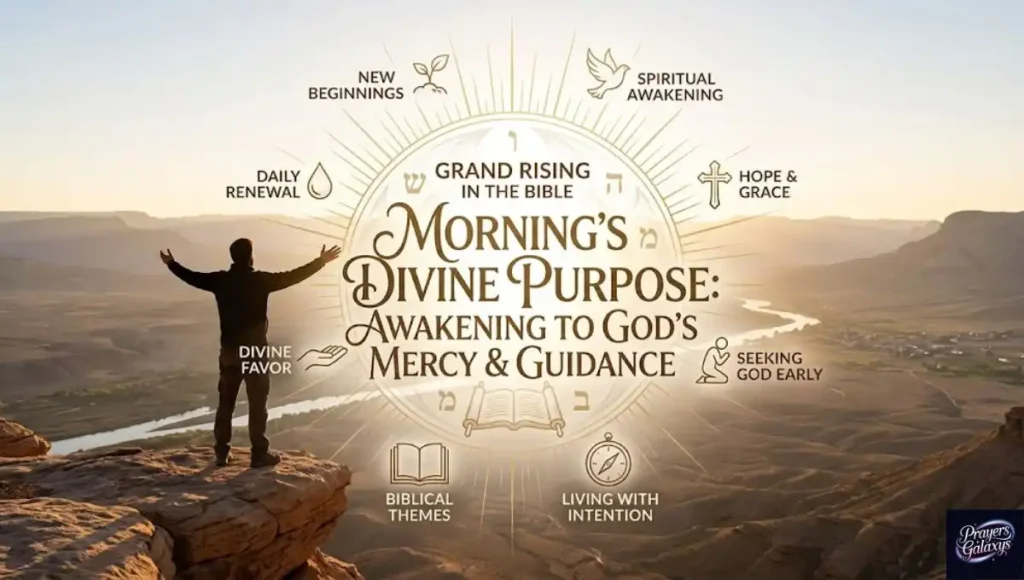
The direct answer is no. The phrase “Grand Rising” does not appear anywhere in the Bible — not in the Hebrew Old Testament, not in the Greek New Testament, and not in any major English Bible translation including the King James Version, ESV, or NIV.
It is not a theological concept. It is not rooted in historic Christian doctrine. However, that does not automatically make it sinful. It simply means this phrase comes from culture, not Scripture. Christians should be clear about this distinction before using it freely.
Must Read : Ryan Name Meaning in Bible: Spiritual Significance Explained
What Does Grand Rising Mean?
The Grand Rising meaning is both simple and intentional. Breaking it down:
- “Grand” — magnificent, elevated, powerful
- “Rising” — waking up, ascending, awakening
Together, the phrase translates roughly to “great awakening” or “powerful rising.” It is used as an uplifting morning greeting — a deliberate alternative to saying “Good Morning.” When someone says Grand Rising, they are wishing you a powerful, conscious, and purposeful start to the day.
People who use this greeting often practice mindful mornings, positive morning affirmations, and gratitude habits. It reflects a mindset rooted in intentional living, not passive routine.
Grand Rising Spiritual Meaning
The Grand Rising spiritual meaning centers on one powerful idea: awakening — not just from sleep, but from unconscious living. In spiritual communities, words are believed to carry vibration and energy. “Morning” sounds like “mourning,” which carries a tone of grief. By choosing “rising,” speakers affirm life, energy, and ascension instead.
The spiritual significance includes:
- Gratitude — recognizing the gift of another day
- Consciousness — living with awareness and purpose
- Alignment — connecting with one’s higher self or divine energy
- Renewal — treating each sunrise as a fresh spiritual reset
From a New Thought and wellness perspective, Grand Rising manifestation meaning ties into the belief that your first words of the day shape your mindset and energy. While this concept has merit in motivation science, Christians must filter it through biblical truth: power comes from God, not from the vibration of words alone.
What Religion Says “Grand Rising”?
No major world religion officially teaches or endorses the phrase “Grand Rising.” It is not found in Christianity, Islam, Judaism, Hinduism, or Buddhism as a formal teaching. What religion says Grand Rising has no single denominational answer.
It is most closely connected to:
- Afrocentric consciousness movements — rooted in African and Caribbean spiritual philosophies
- New Age and New Thought communities — centered on energy, manifestation, and consciousness
- Modern wellness culture — focused on mindfulness-based morning habits
The phrase gained popularity in the early 2010s within spiritual groups and became widespread by 2020 — a trend driven largely by social media platforms like TikTok and Instagram.
Is Grand Rising Witchcraft?
Many Christians ask this directly: Is Grand Rising witchcraft? The honest answer is no — the phrase itself is not a spell, an occult ritual, or a satanic practice.
However, certain beliefs attached to it do raise legitimate biblical concerns:
| Concern | Biblical Response |
| Words carry power independent of God | Proverbs 18:21 — the tongue’s power is always under God’s sovereignty |
| Manifestation through human intention | James 4:13-15 — submit your plans to God’s will |
| Self-power replaces prayer | Philippians 4:6 — prayer and petition come before confidence |
| Word-vibration theories | 1 John 4:1 — test every spirit against Scripture |
Christians should not panic over the phrase but should understand the worldview it sometimes represents and not adopt beliefs that replace trust in God with belief in self-generated energy.
What Does the Bible Say About Rising?
While “Grand Rising” is not biblical, rising in the Bible carries extraordinarily rich meaning. The concept of rising appears across both Testaments with deep spiritual significance:
- Resurrection — Jesus Christ rising from the dead is the most powerful use of “rising” in all of Scripture (Matthew 28:6 — “He is not here; He has risen”)
- Spiritual awakening — Ephesians 5:14 says, “Wake up, sleeper, rise from the dead, and Christ will shine on you”
- God lifting His people — Psalm 3:3 calls God “the One who lifts my head”
- Spiritual vigilance — 1 Peter 5:8 urges believers to “be sober-minded and alert”
Biblically, rising is always connected to God’s power, not human vibration. When God lifts someone, it means deliverance, justice, renewal, and resurrection.
Bible Verses About Morning Renewal and Awakening
Scripture speaks beautifully about the spiritual significance of mornings. These verses align with the biblical meaning of Grand Rising from a faith perspective:
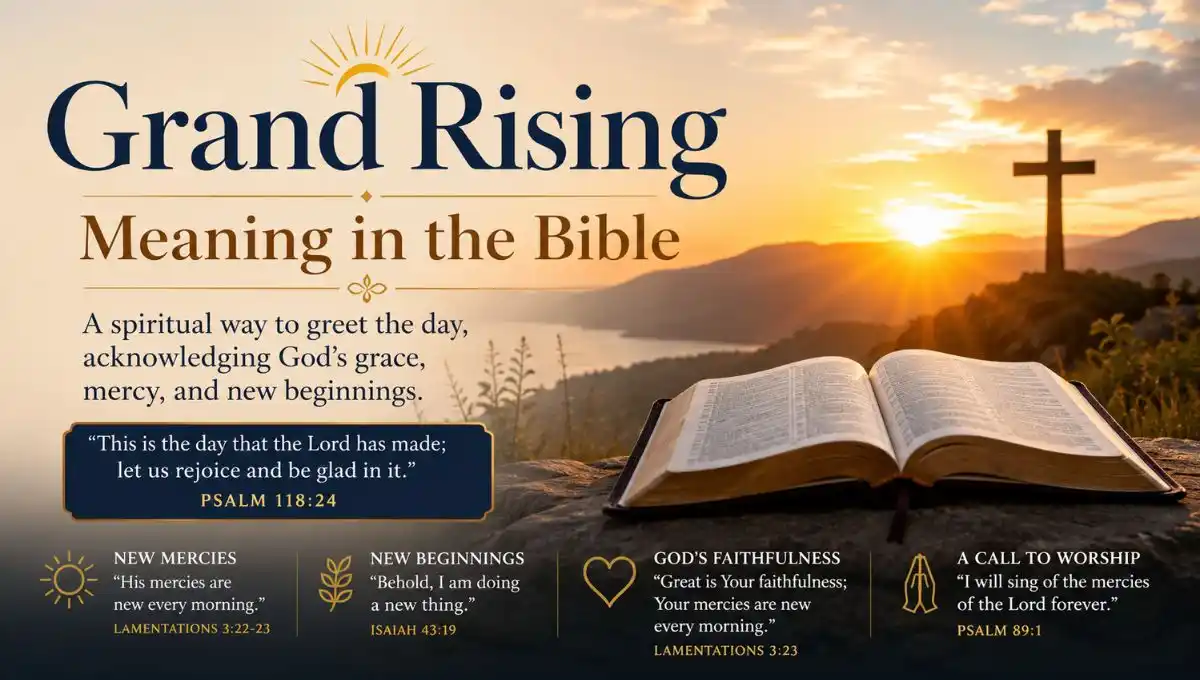
- Lamentations 3:22-23 — “The steadfast love of the Lord never ceases; His mercies never come to an end; they are new every morning.” This is the biblical foundation of morning renewal.
- Psalm 5:3 — “In the morning, Lord, You hear my voice; in the morning I lay my requests before You and wait expectantly.” Morning is the time of prayer and divine communication.
- Isaiah 60:1 — “Arise, shine, for your light has come, and the glory of the Lord rises upon you.” A direct biblical call to rise with purpose.
- Psalm 30:5 — “Weeping may stay for the night, but rejoicing comes in the morning.” Dawn symbolizes transformation from sorrow to joy.
These verses show that the biblical meaning of awakening is grounded in God’s faithfulness — not in human energy or word vibration.
Rich Rising Meaning Spiritually
Some people use the phrase “Rich Rising” as a variation, often to declare prosperity or abundance for the day. Spiritually, this connects to declarations of wealth, success, and overflow.
Biblically, however, true richness is spiritual. Scripture consistently teaches:
- Being rich in faith (James 2:5)
- Being rich in good deeds (1 Timothy 6:18)
- Seeking the kingdom of God first (Matthew 6:33)
Material declarations are not wrong in themselves, but Christians must root their morning intentions in God’s definition of abundance — not just financial or material gain.
How to Respond to “Grand Rising”
If someone greets you with “Grand Rising,” you are free to respond politely and kindly without adopting any belief that conflicts with Scripture. Here are practical responses:
- Simply reply: “Good morning to you too!”
- Use it as a moment of gratitude: “Thank you — every morning is a gift from God.”
- If the context allows, share what Scripture says about morning renewal.
As a Christian, you are not required to use the phrase, but you are also not required to be confrontational about it. Wisdom and grace go together in every interaction.
Grand Rising Origin
The Grand Rising origin is modern and cultural, not biblical or religious. Key facts:
- The phrase began spreading in the early 2010s within African American spiritual communities
- It gained wider adoption through Afrocentric identity and empowerment language
- By 2020, it had moved well beyond spiritual circles into mainstream wellness culture
- Its linguistic foundation comes from the belief that “morning” sounds too close to “mourning,” so “rising” was chosen to carry a more positive, life-affirming vibration
The Grand Rising vs Good Morning comparison shows more than a word preference — it reflects a difference in worldview about what the morning represents and where power comes from.
Biblical Meaning of Grand Rising
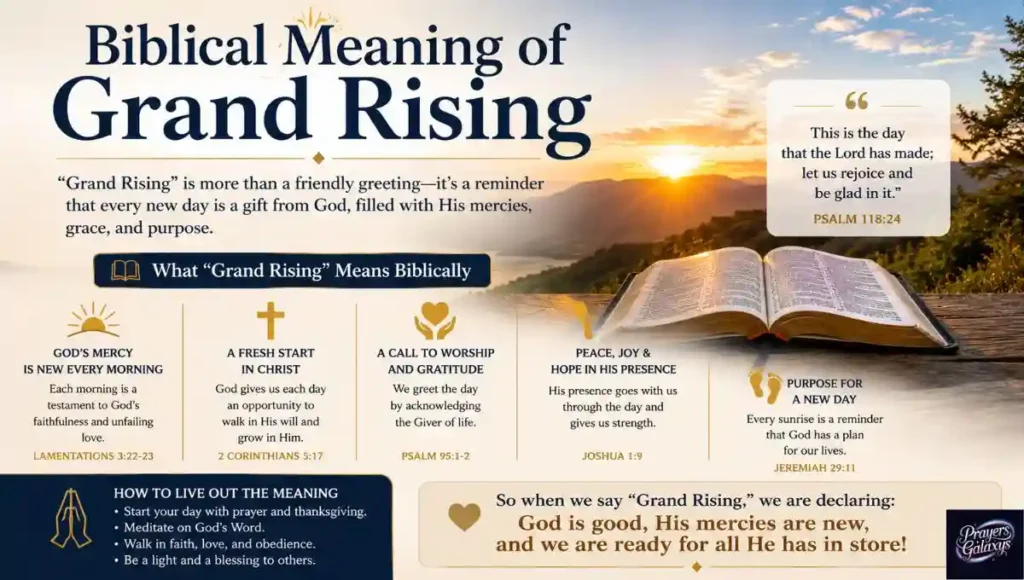
The biblical meaning of Grand Rising, interpreted through Scripture, can be seen as a cultural echo of genuine biblical truth — even if the phrase itself is not from the Bible.
The Bible agrees that:
- Mornings matter — God meets His people at dawn
- Awakening is sacred — spiritual renewal is a daily invitation
- Rising carries meaning — resurrection, restoration, and redemption are all “rising” concepts
However, the biblical truth about Grand Rising is that no greeting, word, or phrase carries divine power on its own. Power belongs to God. Any morning practice — whether prayer, Scripture reading, or a positive greeting — only becomes spiritually meaningful when it is rooted in faith in God, not faith in words.
Spiritual Significance and Symbolism
The Grand Rising spiritual significance overlaps meaningfully with biblical symbolism in one key area: morning as a metaphor for new beginnings.
Across Scripture, sunrise represents:
- New mercy (Lamentations 3:22-23)
- Divine favor (Psalm 30:5)
- Hope for the future (Malachi 4:2 — “the Sun of righteousness will rise with healing in its rays”)
- Resurrection life (Matthew 28:1 — the resurrection occurred at dawn)
The difference is that the Bible always points this symbolism toward God, while Grand Rising in some circles points it toward human consciousness and self-generated energy.
Biblical Interpretations in Dreams or Real Life
In a dream context, some people report seeing the phrase or experiencing a “grand rising” moment — a powerful sense of awakening or spiritual clarity. Biblically, God does speak through dreams (Joel 2:28, Acts 2:17). However, every spiritual experience must be tested against Scripture (1 John 4:1).
If you experience a meaningful moment of morning clarity or awakening, bring it to God in prayer. Let Scripture, not feelings or phrases, be the final authority on what it means.
Practical Lessons and Faith Insights
Here is what Christians can take away from this entire discussion:
- Truth matters — Know the difference between cultural trends and biblical teaching
- Words have context — Grand Rising is a greeting, not a doctrine
- Filter everything through Scripture — 2 Timothy 3:16-17
- Start your morning with God — Prayer, gratitude, and Scripture reading align perfectly with biblical morning renewal
- Be wise, not reactive — You can engage culture without being shaped by it
A God-centered morning routine grounded in prayer and biblical faith is the most powerful way to “rise grandly” every single day.
Conclusion
The Grand Rising meaning in the Bible is clear: the phrase is not biblical, but the concept of morning renewal and awakening is deeply woven throughout Scripture. Christians can engage this cultural trend with grace, discernment, and confidence.
The biblical meaning of Grand Rising, properly understood, points us back to God’s mercy, resurrection power, and daily spiritual renewal. Every morning is a gift from God — and that truth needs no trend to validate it.
FAQs
Q1: Is Grand Rising in the Bible?
No, the phrase “Grand Rising” does not appear anywhere in the Bible or any major Bible translation.
Q2: What does Grand Rising mean spiritually?
It means a powerful, conscious awakening — rising with purpose, gratitude, and intentional energy each morning.
Q3: Is Grand Rising witchcraft?
No, the phrase itself is not witchcraft, though some spiritual beliefs attached to it may conflict with biblical teaching.
Q4: What religion says Grand Rising?
No major world religion officially teaches it; it originates in Afrocentric spiritual and New Age wellness communities.
Q5: Can Christians say Grand Rising?
Yes, but Christians should understand the cultural worldview it represents and ensure their faith stays rooted in Scripture.
Q6: What does the Bible say about rising in the morning?
Lamentations 3:22-23 and Psalm 5:3 both speak about God’s mercies and presence being available fresh every morning.
Q7: What is the origin of Grand Rising?
It emerged in African American spiritual communities in the early 2010s and became mainstream by 2020 through social media.

Welcome to Prayersgalaxys ! I’m Abdul Mannan Haider. Christian Faith Writer | 10+ Years Bible Study Experience | Founder of (prayersgalaxys.com)
Sharing prayers, Daliy Bible Verses and biblical wisdom to strengthen your faith.