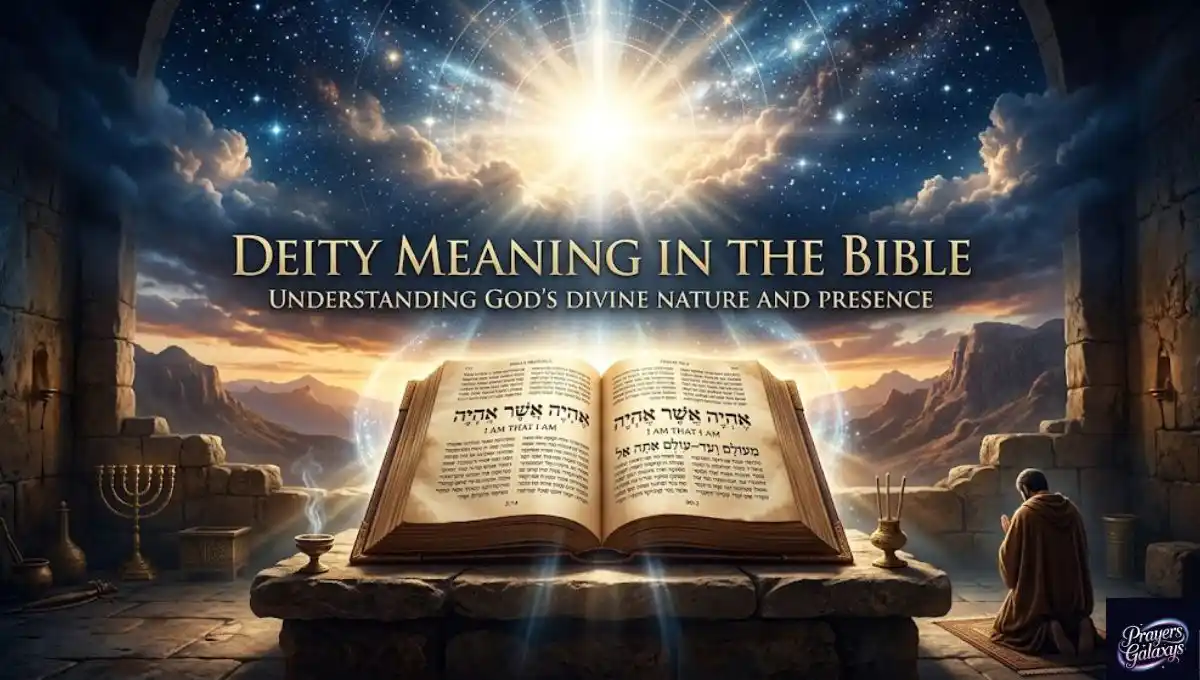
When people search for the deity meaning in the Bible, they are searching for something far deeper than a dictionary definition. They want to understand who God truly is His eternal nature, His sovereign power, and His presence in human life. The deity meaning points to the very essence of God: all-knowing, all-powerful, and eternally present. Whether you are exploring the Godhead, the divine nature of Jesus Christ, or the Trinity, grasping this concept strengthens faith and transforms how believers live every day.
Have you ever wondered what the Deity Meaning in the Bible truly reveals about God’s nature and His relationship with humanity? In Scripture, deity refers to the divine nature, eternal power, and supreme authority of God. The Bible presents God as the Creator of heaven and earth, holy, all-powerful, and everlasting, while also affirming the divinity of Jesus Christ as part of God’s redemptive plan.
Understanding the biblical meaning of deity helps believers deepen their faith, recognize God’s sovereignty, and appreciate His presence in everyday life. By exploring key Bible verses and Christian teachings, we can gain a clearer understanding of God’s divine character, His love, and the spiritual truth that transforms lives.
What Does Deity Mean in the Bible?
The word deity comes from the Latin deitas and the Greek theotes (θεότης), which means “the state of being God” or “divine nature.” In the Bible, this word appears most powerfully in Colossians 2:9:
“For in Christ all the fullness of the Deity lives in bodily form.”
This single verse is one of the most important declarations in all of Scripture. It tells us that Jesus is not merely a great teacher or prophet. He fully embodies God’s divine nature in a human body.
The deity meaning in a biblical context includes:
- Godhood—the quality and essence of being God
- Divine sovereignty—supreme authority over all creation
- Eternal existence—without beginning or end
- Omnipotence—unlimited power
- Omniscience—complete knowledge of all things
- Omnipresence—present everywhere at all times
Read More : Noel Meaning in Bible: A Faith-Filled Message of Hope, Joy, and Christ’s Birth
The Deity of God in the Old Testament
Long before the New Testament revealed the fullness of God’s nature, the Old Testament laid a powerful foundation for understanding deity meaning.
In Isaiah 45:5, God declares:
“I am the Lord, and there is no other; besides Me there is no God.”
This verse establishes that biblical deity meaning is exclusive. There is one true God not many competing powers or equal divine beings.
In Genesis 1:1, Scripture opens with:
“In the beginning God created the heavens and the earth.”
This shows God as the ultimate source and Creator. The very definition of deity. In Exodus 3:14, God reveals His name to Moses as “I AM WHO I AM,” declaring His self-existing, eternal nature. This is the heart of deity meaning: God exists by His own power and depends on nothing outside Himself.
Biblical Meaning of Deity
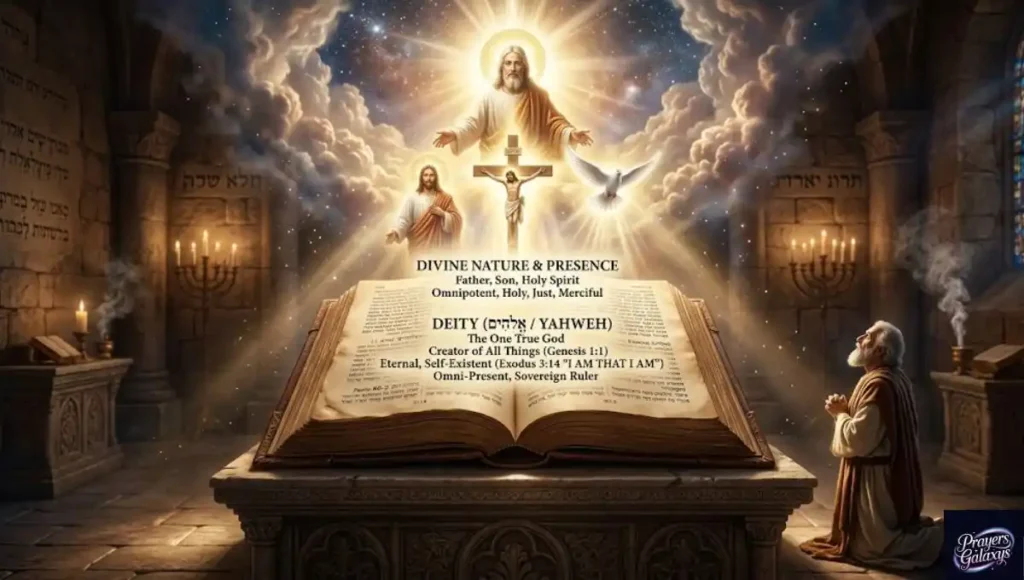
1. Definition of Deity in the Bible
At its core, the deity meaning in the Bible refers to the divine nature, essence, and character of God. The Greek word theotes (used in Colossians 2:9) specifically means the state or rank of being God not merely God-like qualities, but the fullness of divine being itself.
The related term theiotes (Romans 1:20) describes God’s divine qualities. The attributes that flow from His nature, such as His eternal power and moral perfection.
| Greek Term | Translation | Meaning |
| Theotes (θεότης) | Deity / Godhead | The essence or state of being God |
| Theiotes (θειότης) | Divinity / Divine nature | The qualities or attributes of God |
| Theios (θεῖος) | Divine | Relating to or proceeding from God |
2. Deity of God the Father
The deity meaning begins with God the Father. He is the eternal, self-existing Creator who rules over all things. Romans 1:20 tells us:
“For since the creation of the world God’s invisible qualities. His eternal power and divine nature have been clearly seen, being understood from what has been made.”
God’s deity is not hidden. It is visible in the universe He created. His power, wisdom, and holiness declare His divine nature to every human being.
3. Deity of Jesus Christ
One of the most theologically significant aspects of deity meaning in the Bible is the deity of Jesus Christ. Scripture makes bold, clear claims about His divine nature:
- John 1:1—“In the beginning was the Word, and the Word was with God, and the Word was God.”
- John 1:14—“The Word became flesh and made His dwelling among us.”
- Colossians 2:9—“In Christ all the fullness of the Deity lives in bodily form.”
- Hebrews 1:3—Jesus is described as “the exact representation of God’s being.”
These verses confirm that Jesus did not merely reflect deity, He is deity. He is fully God and fully human, a truth unique to Christianity known as the hypostatic union.
4. Deity and the Trinity
The Bible teaches that God’s deity meaning is expressed through the Trinity. Father, Son, and Holy Spirit. Each Person is fully God, yet there is one God. Matthew 28:19 records Jesus commanding:
“Baptize them in the name of the Father and of the Son and of the Holy Spirit.”
The use of a single “name” for three Persons reveals their shared divine nature. The deity meaning in Trinitarian theology means that all three Persons equally possess the fullness of God’s divine essence.
Spiritual Significance and Symbolism of Deity
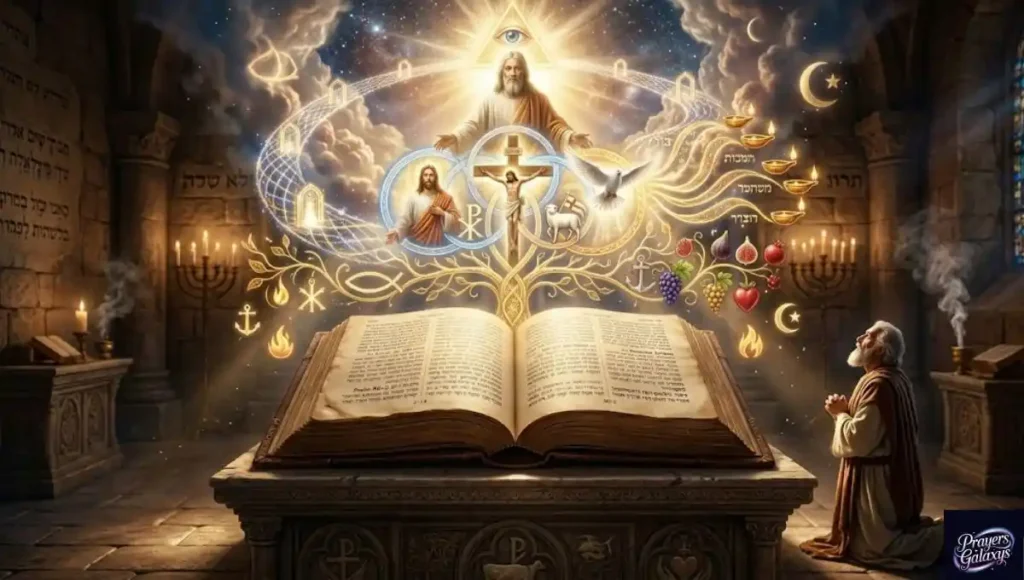
1. Deity as God’s Presence
Understanding the deity meaning reveals that God is never distant. His divine nature means He is present everywhere in creation, in Scripture, and in the lives of believers. Psalm 139:7-8 asks, “Where can I go from Your Spirit? Where can I flee from Your presence?” The answer: nowhere. God’s deity means His presence is inescapable and all-encompassing.
2. Deity and Human Faith
Grasping the deity meaning is not just academic, it is deeply personal. When a believer understands that God is truly divine, omnipotent, omniscient, and eternal, faith becomes unshakeable. Trials feel smaller when they are measured against an infinite God. Prayer becomes more powerful when offered to a Deity who holds all authority.
3. Transformation Through Knowing God
2 Peter 1:3-4 teaches that God’s divine power has given believers “everything needed for a godly life.” The passage even says believers become “partakers of the divine nature.” This is one of the most remarkable statements about deity meaning in all of Scripture that through Christ, humans can be spiritually transformed and share in God’s moral character.
Deity in Daily Life and Spiritual Experience
1. Recognizing God’s Deity in Life
The deity meaning is not confined to theology classrooms. Believers recognize God’s divine nature in:
- Creation—the beauty and order of the universe declare His glory
- Scripture—every verse reveals who God is
- Prayer—speaking to an all-knowing, all-loving Deity
- Community—the Church reflecting God’s nature in the world
- Hardship—trusting an omnipotent God through suffering
2. Deity in Christian Belief
For Christians, deity meaning is the foundation of salvation. If Jesus were not fully God, His death could not pay the infinite price of human sin. Because He is fully divine, His sacrifice carries eternal value. This is why the deity of Christ is not a minor theological point. It is the very basis of the Christian Gospel.
3. Responding to God’s Deity
Recognizing God’s deity meaning calls believers to respond in three ways:
- Worship—He alone is worthy of praise (Revelation 4:11)
- Trust—His divine power means nothing is impossible for Him
- Obedience—living in submission to a sovereign, holy God
Practical Lessons and Faith Insights
Understanding deity meaning in the Bible leads to practical transformation in the life of a believer. Here are key lessons drawn from Scripture:
| Lesson | Biblical Basis | Application |
| God is self-sufficient | Exodus 3:14 (“I AM”) | He needs nothing from us; we depend on Him |
| Jesus is fully God | Colossians 2:9 | Trust His power to save completely |
| God’s nature is unchanging | Malachi 3:6 | His promises never fail |
| He sees and knows all | Psalm 139:1-4 | Live with integrity; nothing is hidden |
| His presence brings peace | Romans 15:13 | Rest in His nearness during hard times |
| Believers share in His nature | 2 Peter 1:4 | Pursue holiness and Christ-likeness |
Frequently Asked Questions
Q1. What is the simple deity meaning in the Bible?
Deity means the divine nature or essence of God. The quality of being fully and truly God.
Q2. Where does the word “deity” appear in the Bible?
The clearest use is in Colossians 2:9, where Paul states that all the fullness of the Deity lives in Christ bodily.
Q3. What is the Greek word for deity in the Bible?
The Greek word is theotes (θεότης), meaning the state or essence of being God.
Q4. Is Jesus fully deity according to the Bible?
Yes. John 1:1, John 1:14, and Colossians 2:9 all affirm that Jesus is fully God in human form.
Q5. What is the difference between deity and divinity?
Deity (theotes) refers to the essence of being God; divinity (theiotes) refers to the qualities or attributes that proceed from God.
Q6. How does understanding deity meaning strengthen faith?
Knowing God is fully divine. All-powerful, all-knowing, and eternal gives believers unshakeable confidence in His promises and protection.
Q7. Does the Holy Spirit share in God’s deity?
Yes. The Bible teaches the Trinity Father, Son, and Holy Spirit equally share the same divine nature (Matthew 28:19; 2 Corinthians 13:14).
Q8. What does it mean to be a “partaker of the divine nature” (2 Peter 1:4)?
It means believers are spiritually transformed through Christ to reflect God’s moral character not becoming God themselves, but sharing in His holiness and righteousness.
Conclusion
The deity meaning in the Bible is one of the most profound and life-changing truths in all of Scripture. From the Old Testament declaration that God alone is Lord (Isaiah 45:5), to the New Testament revelation that all the fullness of deity dwells in Christ (Colossians 2:9), the Bible presents a consistent, powerful picture of God’s divine nature. Understanding deity meaning is not just theology. It is the foundation of Christian faith, worship, and daily life.
When believers grasp who God truly is eternal, omnipotent, omniscient, and fully present everything changes. Prayer deepens, trust grows, and fear fades. The deity meaning in the Bible calls every person to bow before the one true God, follow Jesus Christ whose deity makes salvation possible, and live transformed by the power of the Holy Spirit who dwells within every believer.

Welcome to Prayersgalaxys ! I’m Abdul Mannan Haider. Christian Faith Writer | 10+ Years Bible Study Experience | Founder of (prayersgalaxys.com)
Sharing prayers, Daliy Bible Verses and biblical wisdom to strengthen your faith.