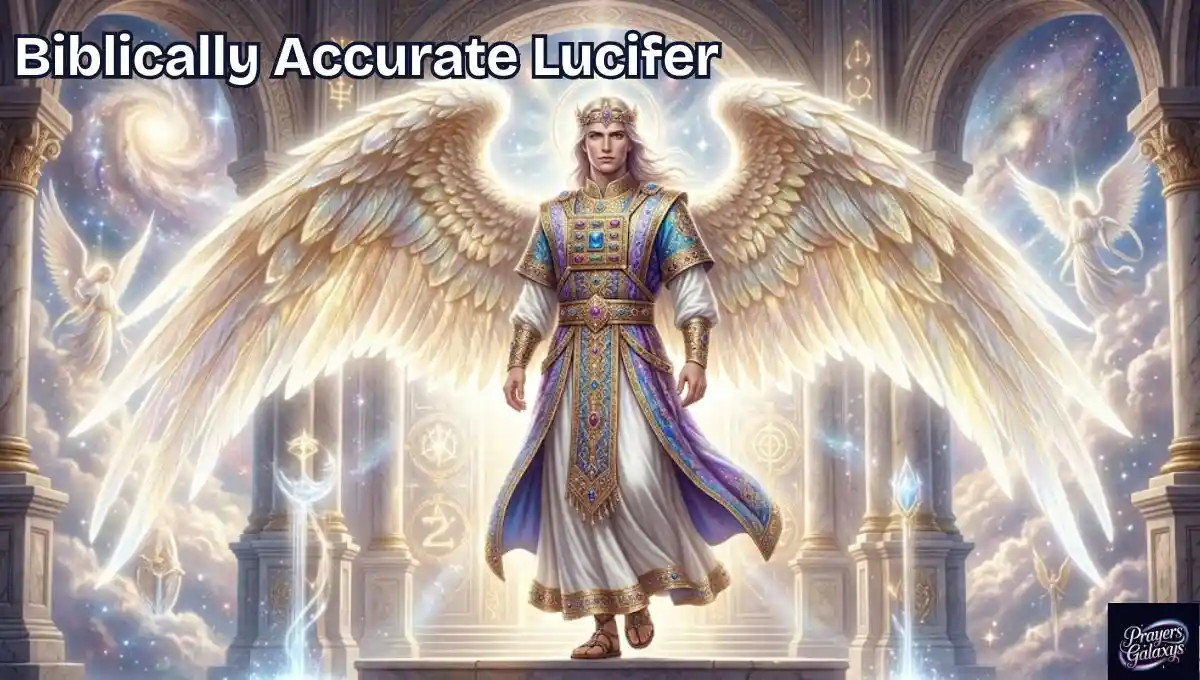
Many people search for the biblically accurate Lucifer, hoping to separate Hollywood myths from Scripture’s actual teaching on this fallen angel. Lucifer in the Bible is often confused with Satan, but understanding the Hebrew word Helel, the Latin Vulgate translation, and biblical demonology reveals a deeper truth rooted in Isaiah 14 and Ezekiel 28.
This article explores Lucifer’s biblical meaning, his pre-fall glory as a heavenly cherub, his five “I will” statements of pride, and the rebellion in heaven that led to his fall. By examining Lucifer Bible verses, we uncover the true story behind the morning star, light bearer, and prince of darkness.
Biblically Accurate Understanding of Lucifer’s Identity
Lucifer is one of the most discussed and misunderstood figures in the Bible. While many people associate Lucifer with Satan, Scripture reveals a deeper story about pride, rebellion, and separation from God.
Common Misconceptions About Lucifer in Modern Culture
Pop culture portrays Lucifer as a red-skinned devil with horns and a pitchfork, but this image has no biblical basis. The biblically accurate Lucifer is far more complex than entertainment depictions suggest.
What Scripture Actually Reveals About Lucifer
The Bible never explicitly names “Lucifer” as Satan’s proper name. Instead, the term appears in a specific prophetic context describing a fallen king and, by extension, a fallen angel.
The Hebrew Original: Helel and Its True Meaning
The Hebrew word Helel ben Shachar means “shining one, son of dawn.” This phrase describes brilliance and glory, not a personal name for Satan.
Jerome’s Latin Vulgate and the Birth of ‘Lucifer’
Jerome translated Helel into Latin as “Lucifer,” meaning “light bearer” or “morning star,” giving rise to the name used in English Bibles.
King James Translation and English Christian Tradition
The King James Version popularized “Lucifer” in Isaiah 14, cementing its association with Satan in Christian tradition.
Biblically Accurate Lucifer Description of Lucifer’s Appearance
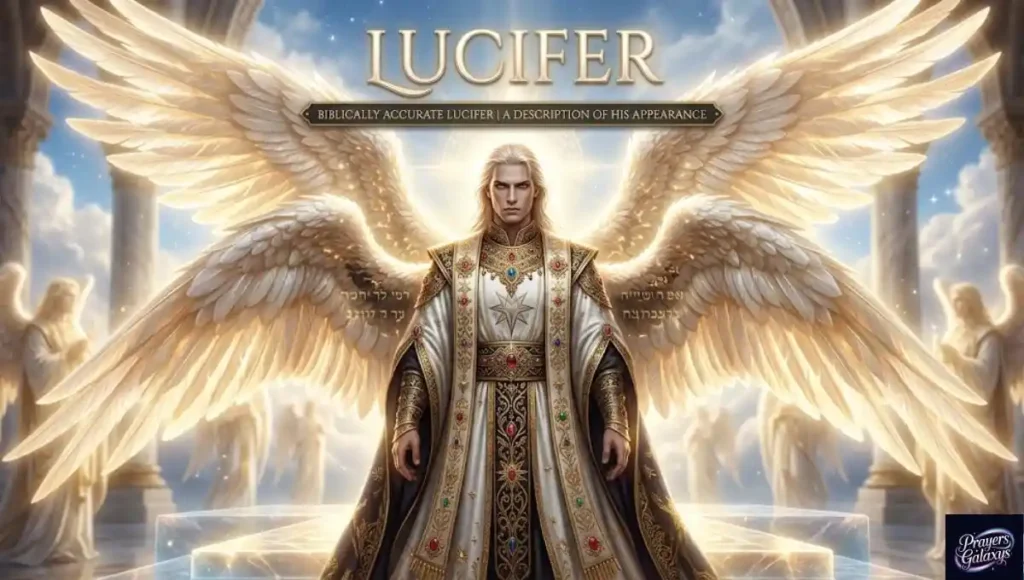
The Bible does not provide a detailed physical description of Lucifer after his fall, but passages such as Ezekiel 28:12–17 portray him as exceptionally beautiful, radiant, and adorned with precious stones before his rebellion against God. His appearance symbolizes splendor, wisdom, and glory that were ultimately corrupted by pride.
Lucifer’s Pre-Fall Glory According to Ezekiel
Ezekiel 28 describes a being covered in precious stones, full of wisdom and perfect in beauty, identified as a guardian cherub in the garden of God.
The Morning Star Imagery in Isaiah’s Prophecy
Isaiah 14 uses “morning star” and “son of the morning” imagery, comparing Venus’s brightness to this once-glorious celestial being.
Does Lucifer Possess Physical Form After His Fall
Scripture is silent on a literal post-fall appearance. Lucifer, as a spiritual being, has no fixed physical form described in the Bible.
What Biblical Silence Tells Us Lucifer Is Not
- Not a red creature with horns
- Not confined to a throne in hell
- Not described with goat features
- Not given a detailed post-fall body
Lucifer in Isaiah and Ezekiel: Interpreting the Key Biblical Passages
| Passage | Subject | Key Theme |
| Isaiah 14 | King of Babylon | Pride and fall |
| Ezekiel 28 | King of Tyre | Perfection and corruption |
| Luke 10:18 | Satan’s fall | Confirmation of fall |
| Revelation 12 | Dragon | War in heaven |
Symbolism and Meaning Behind Lucifer’s Role in Biblical Texts
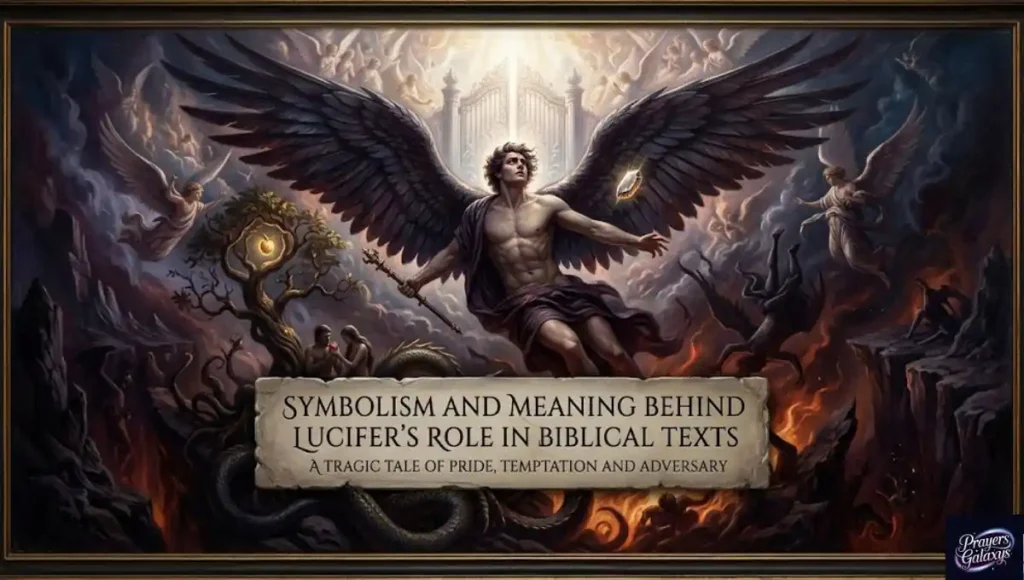
The morning star symbolism represents glory before judgment. Lucifer’s biblical meaning centers on pride leading to downfall, serving as a warning against rebellion against God.
Common Misinterpretations About Lucifer in Modern Culture
- Confusing Lucifer with Satan’s actual name
- Assuming Lucifer rules hell from a throne
- Believing Lucifer has red skin and horns
- Treating poetic prophecy as literal biography
Critical Distinction Between Lucifer and Satan in Scripture
Understanding Lucifer’s identity through a biblically accurate Lucifer lens helps believers distinguish between tradition and what the Bible actually teaches about his origin, fall, and spiritual significance.
Biblical Evidence Supporting Their Distinction
The name “Lucifer” appears in a specific prophetic passage about a king, while “Satan” is used broadly throughout Scripture as the adversary of God.
How Christian Tradition Merged These Figures
Early church writers connected Isaiah 14 to Satan’s fall, blending the king of Babylon prophecy with the broader narrative of Satan in Scripture.
Protestant Reformers’ Rejection of the Equation
Some reformers, including Martin Luther and John Calvin, questioned overly literal equations between Lucifer and Satan, focusing instead on the spiritual lesson.
Why This Theological Distinction Matters Today
Understanding this distinction helps believers interpret Scripture accurately rather than relying on tradition alone.
Don’t Miss : Biblically Accurate Demon: What Does the Bible Really Say?
Biblically Accurate Account of Lucifer’s Fall and Significance
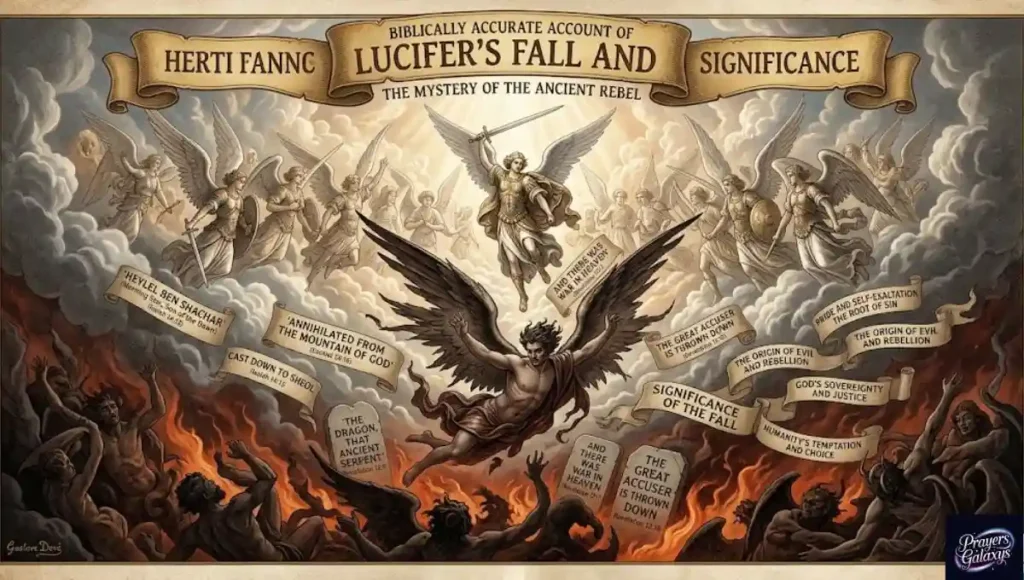
Many biblical scholars view these descriptions as symbolic rather than a literal portrait, emphasizing Lucifer’s original perfection and subsequent downfall rather than defining his exact physical form.
The Narrative of the Fallen Angel in Scripture
The fallen angel narrative describes being cast out of heaven due to pride, becoming the spiritual enemy of humanity.
Lucifer’s Five ‘I Will’ Declarations of Pride
- “I will ascend to heaven”
- “I will raise my throne above God’s stars”
- “I will sit on the mount of assembly”
- “I will ascend above the clouds”
- “I will make myself like the Most High”
The Nature of Sin: Pride in God-Given Perfection
Pride’s specific temptation arose from Lucifer’s giftedness and exalted position, turning blessing into rebellion.
Catastrophic Consequences of Angelic Rebellion
The rebellion in heaven resulted in immediate judgment and expulsion from God’s presence.
The Scope of Rebellion: One-Third of Angels
Revelation suggests one-third of angels followed Lucifer, becoming fallen angels in Scripture.
Artistic Evolution of Lucifer’s Image Throughout History
Early Medieval Period: The Ethereal Blue Angel
Early Christian art depicted Lucifer as a beautiful blue-toned angel, emphasizing former glory.
High Medieval Transformation to Grotesque Forms
By the High Middle Ages, Lucifer’s image shifted toward grotesque, monstrous forms to represent moral corruption.
Renaissance Romanticization: Milton’s Tragic Rebel
John Milton’s Paradise Lost portrayed Lucifer as a tragic, charismatic rebel, influencing centuries of literature.
Victorian Era Through Modern: The Theatrical Red Devil
The familiar red devil with horns emerged largely from Victorian theater and modern entertainment, not Scripture.
Contrasts Between Artistic and Biblical Portrayals
| Era | Depiction | Biblical Accuracy |
| Early Medieval | Blue angel | Closer to glory imagery |
| High Medieval | Monstrous | Symbolic, not literal |
| Renaissance | Tragic rebel | Emphasizes pride theme |
| Modern | Red devil | Largely cultural invention |
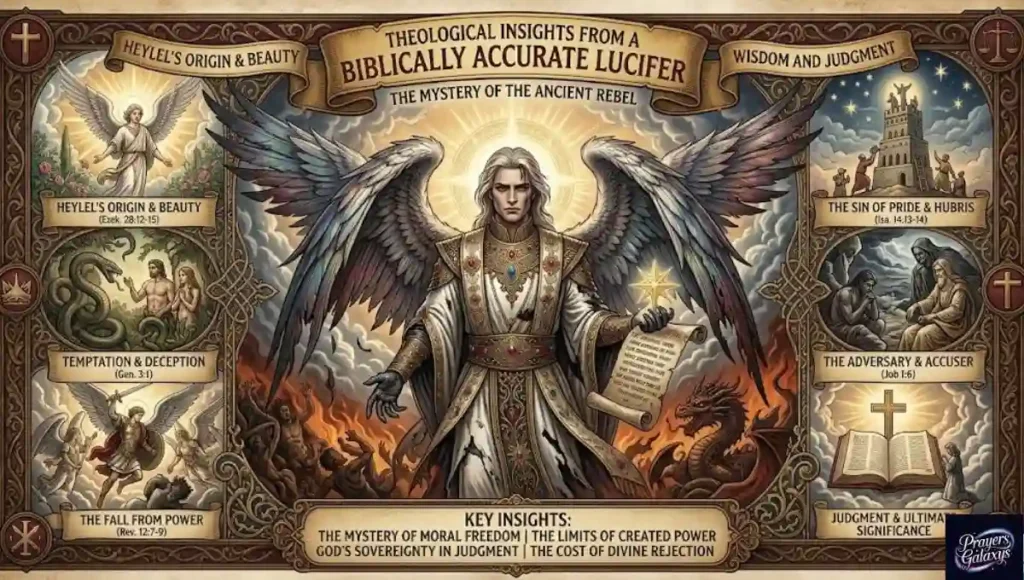
Theological Insights from a Biblically Accurate Lucifer
The Paradox of Created Perfection and Free Will
Lucifer was created perfect, yet free will allowed rebellion against God’s authority.
The Origin of Evil Within a Perfect Being
This raises the origin of evil within a being created without flaw, choosing corruption through pride.
Pride’s Specific Temptation: Giftedness and Position
His beauty, wisdom, and position became the very source of his downfall.
Cosmic Implications: Corrupting Others and Spiritual Warfare
Lucifer’s rebellion introduced spiritual warfare, influencing fallen angels and humanity alike.
Lessons for Humanity: Humility and Dependence on God
Believers are reminded to remain humble and dependent on God rather than self-exalting.
Frequently Asked Questions
1. Who was Accurate Lucifer in the Bible?
Accurate Lucifer refers to a “shining one” figure described in Isaiah 14, traditionally linked to Satan’s fall.
2. What does Accurate Lucifer mean in Hebrew?
The Hebrew term Helel means “shining one” or “son of the dawn.”
3. Is Lucifer actually Satan?
Many traditions equate them, though the biblical text directly addresses a king using this imagery.
4. Why did Lucifer fall from heaven?
Pride and self-exaltation led to his fall, according to Isaiah and Ezekiel.
5. What did Lucifer look like before the fall?
Ezekiel describes a being adorned with precious stones and perfect beauty.
6. Does Lucifer rule hell?
The Bible does not describe Lucifer ruling hell from a throne.
7. Did one-third of angels follow Lucifer?
Revelation’s imagery suggests a significant portion of angels joined the rebellion.
Last Words
The biblically accurate Lucifer reveals far more than popular culture’s red devil imagery, rooted instead in Hebrew language, prophetic poetry, and theological symbolism. From Isaiah 14 to Ezekiel 28, Scripture paints a picture of pride leading to a dramatic fall from heaven.
Understanding Lucifer’s biblical meaning helps believers grasp the seriousness of pride, the reality of spiritual warfare, and the importance of humility before God. This biblically accurate Lucifer ultimately points toward God’s justice and the ongoing cosmic conflict between light and darkness.

Welcome to Prayersgalaxys ! I’m Abdul Mannan Haider. Christian Faith Writer | 10+ Years Bible Study Experience | Founder of (prayersgalaxys.com)
Sharing prayers, Daliy Bible Verses and biblical wisdom to strengthen your faith.